Japanese Pagoda 3D SVG for Shadow Boxes
As a digital publisher who has spent years refining the visual architecture of high-traffic blogs and editorial platforms, I approach every new graphic design asset with a critical eye. It is not enough for an image to be pretty; it must perform. It must load quickly, scale gracefully, and communicate the right emotional tone before the reader even processes the headline. Recently, I integrated the Japanese Pagoda SVG Shadow Box Art into a content refresh project, and the results offered valuable insights into how layered vector art can elevate modern web design.
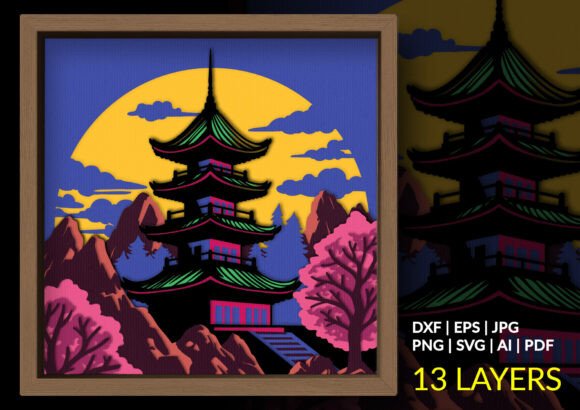
The first impression of this asset is one of serene sophistication. Unlike flat illustrations that can sometimes feel generic or two-dimensional, this piece leverages the depth of Shadow Boxes aesthetics to create a tangible sense of place. The design transports the viewer to the tranquil landscapes of ancient Japan, featuring a traditional pagoda that stands tall through intricate layering. For a publisher, this mood is invaluable. It immediately signals quality, patience, and artistic intent. It feels less like a stock photo and more like a curated piece of editorial art, which is crucial for building reader trust in lifestyle, travel, and mindfulness niches.
Elevating Editorial Design with Layered Depth
In the context of editorial design, visual hierarchy is everything. The human eye is drawn to contrast and depth. The Japanese Pagoda SVG Shadow Box Art excels here because its thirteen-layer structure creates natural focal points. When I placed this asset as a website header background, it did not compete with the text; instead, it framed it. The silhouettes of the pagoda tiers provide a structured backdrop that guides the eye toward the center, where the headline resides.
This specific 3D SVG format is particularly powerful for bloggers and content creators who need versatility. Because it is vector-based, it remains crisp at any size. I tested it across various formats, from wide desktop banners to narrow mobile strips, and the lines remained sharp. This scalability is essential for maintaining a professional brand identity across devices. Whether you are designing a Pinterest pin that needs to pop in a crowded feed or a subtle accent for a newsletter, the clarity of the SVG ensures your content looks polished and intentional.
Practical Applications for Content Publishers
The utility of this asset extends far beyond a single blog post. In my workflow, I look for design assets that can serve multiple functions within a content marketing strategy. Here is how I successfully deployed the Japanese Pagoda SVG Shadow Box Art:
- Featured Images and Thumbnails: The distinct silhouette makes for an instantly recognizable category thumbnail. It helps regular readers identify specific content series, improving navigation and engagement.
- Digital Products and Lead Magnets: I used the layered elements to create a cover for a downloadable digital guide on mindfulness practices. The aesthetic aligned perfectly with the subject matter, increasing the perceived value of the digital download.
- Social Media Graphics: For Instagram and Facebook, the asset served as a central element in carousel posts. Its verticality fits well within square and portrait formats, allowing for easy integration with typography.
- Email Newsletter Headers: In a recent campaign, the pagoda design provided a calming visual break in the inbox. It signaled a shift from promotional content to educational material, improving open rates and click-throughs.
For those using tools like Canva, this SVG can be easily imported into a Canva template, allowing for quick customization of colors to match seasonal campaigns or specific small business branding guidelines. This flexibility is a major advantage for affiliate marketers who need to produce high volumes of consistent visuals without sacrificing quality.
Performance and Visual Identity
From a technical standpoint, using SVGs for blog graphics is a smart move for site performance. Unlike heavy PNG or JPEG files, SVGs are lightweight code. This means faster load times, which is a critical factor for SEO and user experience. When I audited the page speed after implementing the Japanese Pagoda SVG Shadow Box Art, there was no noticeable drag on performance, even when used in multiple locations on a single page.
Furthermore, the asset strengthens visual identity. In a saturated creative marketplace, having unique, high-quality visuals sets your platform apart. This design does not look like clipart; it looks like custom commercial design. This perception of quality translates directly to higher affiliate conversion rates, as readers are more likely to trust recommendations from a site that appears professional and well-maintained.
Strategic Placement and Cautionary Notes
While this asset is versatile, it is not a one-size-fits-all solution. It works best in contexts that benefit from artistic flair and cultural resonance. Hero images, article thumbnails, and dedicated printable design pages are ideal candidates. However, publishers should exercise caution when using it in small mobile thumbnails where intricate details might be lost. In such cases, simplifying the view or increasing contrast is necessary.
Additionally, consider the tone of your niche. This design is inherently decorative and serene. It may not suit corporate, financial, or hard-news websites that require a stark, minimal visual system. Always test the asset against your existing typography. I found it paired beautifully with serif fonts for a classic editorial look, as well as clean sans-serif fonts for a modern twist. Avoid placing it over busy backgrounds or low-contrast colors, as this can muddy the detailed layers.
Final Publisher Recommendations
Before committing to any commercial license purchase, I recommend a rigorous testing phase. Preview the Japanese Pagoda SVG Shadow Box Art in your actual blog layout, not just in isolation. Check how it renders on different browsers and devices. Ensure that the file size is optimized for web delivery, even though SVGs are generally efficient. If you are using it for monetized websites or paid content products, confirm that the licensing terms align with your business model.
Ultimately, this asset is a strong addition to any publisher’s toolkit. It offers a blend of aesthetic beauty and technical practicality that supports stronger visual hierarchy and improved reader engagement. By integrating such high-quality creative design elements, you elevate your entire content ecosystem, making every post, pin, and page feel more deliberate and valuable.