Reviewing You Are My Penguin Valentines Card SVG for Embroidery
As an embroidery designer who spends half my life tweaking digitized files and the other half testing them on actual fabric, I have learned to look past the glossy preview images. We all know that a design can look perfect on a screen but turn into a puckered mess once the needle hits the cloth. Recently, I evaluated You Are My Penguin Valentines Card SVG with a specific goal in mind: determining its viability not just as a paper craft, but as a source of inspiration and structural reference for real-world embroidery projects.
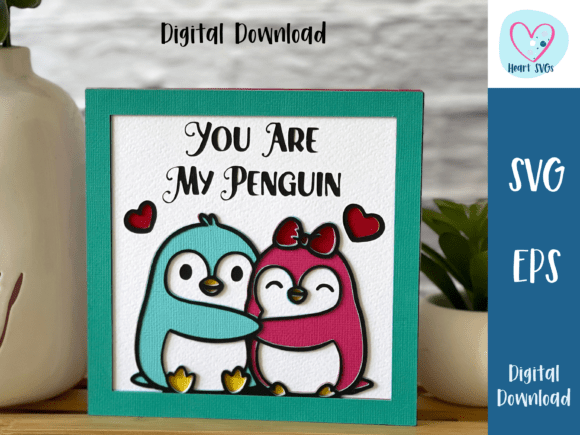
The product description highlights that penguins mate for life, making this a poignant choice for Valentine S Day gifts. While the file is marketed as a 3D SVG for cutting cards, the clean lines and distinct shapes offer valuable insights for those of us working with thread. Here is my practical assessment of how this aesthetic translates from digital cut file to stitched finished product.
First Impressions: Mood and Visual Personality
The immediate appeal of You Are My Penguin Valentines Card SVG lies in its simplicity. In embroidery, complexity is often the enemy of clarity. This design features bold, recognizable shapes that communicate affection without relying on intricate, fragile details that might get lost in stitching. The mood is undeniably sweet and nostalgic, tapping into the "cute" factor that drives sales for handmade product lines.
For a designer, the layout suggests a strong central focal point. When I visualize this as an embroidery project, I see potential for high contrast. The black and white nature of penguins allows for dramatic use of thread colors. However, because the source is a cut file, one must be cautious. Cut files rely on solid shapes, whereas embroidery relies on stitch direction and density. Translating this requires careful consideration of how to fill those shapes without creating a stiff, cardboard-like texture on the fabric.
Real-World Application: From Screen to Stitch
I recently worked on a custom order for a boutique client who wanted a cohesive line of custom apparel for February. The challenge was finding a design that felt romantic but not overly cliché. While You Are My Penguin Valentines Card SVG is technically a card template, its silhouette provided the perfect blueprint for a sweatshirt embroidery patch.
By adapting the core shapes from the SVG into a digitized format, we created a charming motif for a crewneck sweatshirt. The key was simplifying the internal details. In embroidery, less is often more. We used a fill stitch for the body of the penguin to give it weight and a satin stitch border to define the edges sharply. This approach ensured the design remained legible even from a distance, which is crucial for apparel.
Beyond apparel, this design concept works exceptionally well for tote bag design. A canvas tote benefits from bold, simple imagery. The penguin motif, when stitched with high-quality rayon or polyester thread, adds a tactile element that printed designs cannot match. It elevates a standard bag into a personalized gift that feels substantial and cherished. For Etsy seller accounts, offering such items can significantly boost engagement, as buyers are increasingly seeking unique, handcrafted alternatives to mass-produced holiday decor.
Navigating Technical Challenges
While the visual appeal is strong, executing this design requires technical precision. One must consider stitch density carefully. If you simply auto-digitize a shape from a digital embroidery file source without adjustment, the result can be dense and heavy. This is particularly problematic on stretchy fabric or thin materials like jersey knits. A high-density fill can cause the fabric to pucker, ruining the clean lines that make the penguin design effective.
Another critical factor is the hoop size. If you are planning to incorporate this into a larger scene or add text such as "You Are My Penguin," you need to ensure your hoop can accommodate the entire composition without requiring re-hooping, which risks alignment errors. For smaller items like baby embroidery on onesies, scaling down the design is necessary. However, reducing size too much can cause tiny lettering or fine details to merge together. I always recommend running a test stitch-out on scrap fabric of the same type before committing to the final garment.
When working on curved surfaces, such as caps or hats, the geometry changes. A flat design like this may distort if not properly compensated for in the digitizing phase. Using a running stitch for underlay can help stabilize the fabric and prevent shifting, ensuring the final image remains crisp. Additionally, the choice of stabilizer is non-negotiable. For knit fabrics, a cut-away stabilizer provides the necessary support, while woven fabrics might only require a tear-away.
Enhancing Product Value and Brand Consistency
Incorporating themes from You Are My Penguin Valentines Card SVG into your craft business inventory can enhance brand consistency. If your shop focuses on whimsical, nature-inspired, or romantic items, this motif fits seamlessly. It allows for cross-promotion across different product categories. For instance, you could offer a matching set: a embroidered patch for a jacket and a coordinated kitchen towel for the home.
Customers perceive embroidered items as higher value than printed ones. The texture of the thread, the slight raise of the applique design elements, and the durability of the stitch work all contribute to a sense of quality. When a buyer receives a holiday embroidery piece that feels substantial and well-made, it builds trust. They are more likely to return for future purchases, such as wedding gifts or nursery decor.
Furthermore, using this design as a basis for commercial embroidery projects allows for customization. You can change the thread colors to match specific brand palettes or customer requests. A pink beak and feet might appeal to a traditional Valentine’s audience, while a more naturalistic color scheme could work for year-round wildlife-themed collections. This flexibility makes the design a versatile asset for any small shop product line.
Practical Designer Notes for Execution
Before you begin stitching, keep these practical tips in mind to ensure professional results:
- Test on Scrap Fabric: Always run a test on the exact fabric type you plan to use. This reveals issues with tension, density, and stabilizer compatibility.
- Check Thread Contrast: Ensure your background fabric contrasts sufficiently with the penguin’s black and white features. On dark fabrics, you may need to adjust the design to include white outlines or highlights.
- Review Stitch Density: Avoid overly dense fills that can make the fabric stiff. Use lighter fill patterns or incorporate negative space where possible.
- Confirm Hoop Size: Measure your design against your hoop capabilities. Ensure there is enough margin for the frame to grip the fabric securely.
- Inspect Small Details: If the SVG includes tiny elements, verify they are large enough to stitch cleanly. Simplify or remove details that are too small for reliable embroidery.
- Mockup in Black and White: Check the design’s readability in grayscale. If it loses definition, you may need to adjust line weights or contrast.
- Licensing Verification: Since You Are My Penguin Valentines Card SVG is sold as a cut file, confirm the licensing terms. Ensure you have the right to use the design concept for commercial embroidery products. If the license restricts commercial use of the digital file, you may need to create your own original digitization inspired by the theme rather than converting the file directly.
In conclusion, while You Are My Penguin Valentines Card SVG is marketed for paper crafting, its clean, emotive design offers excellent potential for embroidery professionals. By understanding the technical requirements of translating cut shapes into stitches, designers can create high-quality design assets that resonate with customers. Whether for a printable mockup preview or a tangible finished product, the key lies in respecting the medium’s limitations while leveraging its unique textural advantages.